
Roadside Incident Emergency Protocol
Establishing a clear protocol for the immediate aftermath of a roadside incident is critical for ensuring safety and legal compliance. Here is a scenario illustrating these emergency procedures in action.
Scenario: The Multi-Step Response
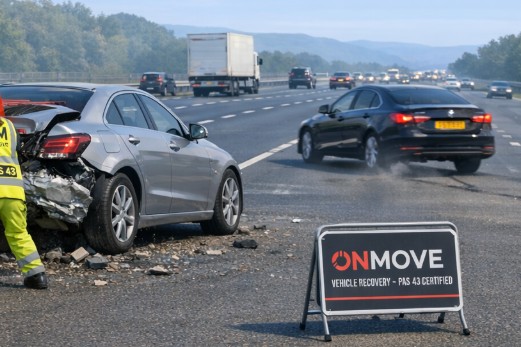
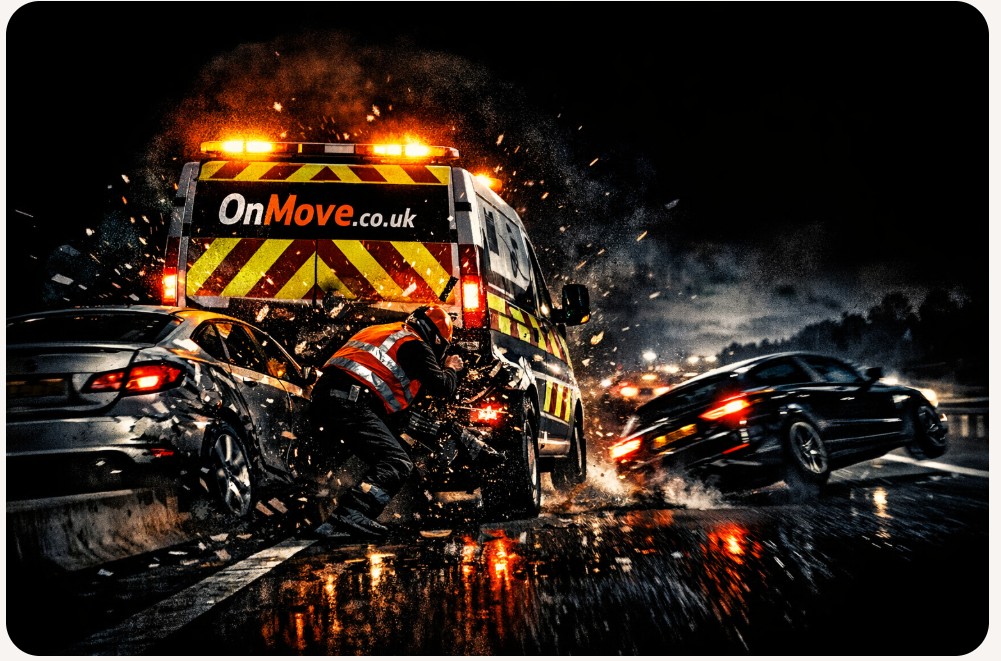
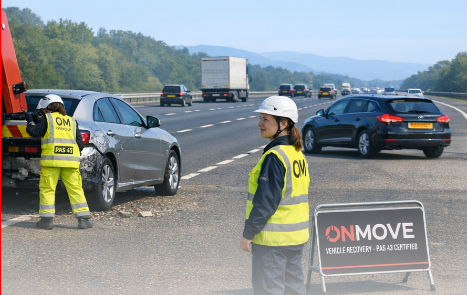
Context: A service vehicle is parked on a high-speed shoulder for routine maintenance. A passing motorist clips the rear of the service vehicle, resulting in a minor collision with injuries and a secondary "near-miss" involving a third vehicle.
1. Immediate Collision Actions
Upon impact, the priority is stabilization and containment.
- Scene Safety: The driver immediately engages the parking brake, turns off the engine to prevent fire risk, and activates all hazard lights.
- Initial Assessment: Before exiting, the driver checks themselves for injury and performs a quick 360° visual sweep of the mirrors to ensure it is safe to step out.
- Physical Perimeter: The driver deploys high-visibility triangles at 10m, 30m, and 100m intervals to warn oncoming traffic.
2. Triage and Injury Management
The "Check-Call-Care" Rule
The driver approaches the other vehicle. Finding the motorist dazed and bleeding from a minor head wound, they stabilize the individual without moving them (to avoid aggravating potential spinal injuries).
First Aid: Utilizing the vehicle's trauma kit, the driver applies direct pressure to the wound using sterile gauze.
3. Escalation to Emergency Services
Once the immediate danger is stabilized, formal escalation begins. The driver provides a "METHANE" report:
- Major Incident (Type of crash)
- Exact Location (GPS or mile marker)
- Type of Incident (Vehicle vs. Vehicle)
- Hazards (Fuel leak or traffic flow)
- Access (Best route for ambulance)
- Number of casualties
- Emergency Services required
4. Near-Miss and Incident Documentation
During the wait for help, a third car swerves violently to avoid the debris, nearly hitting the driver. This is recorded as a Near-Miss.
- Evidence Collection: The driver uses a mobile device to take photos of vehicle positions, skid marks, and weather conditions.
- Witness Statements: If bystanders are present, the driver collects names and contact numbers but avoids discussing fault or liability.
Incident Priority Table
| Priority |
Action |
Goal |
| Critical |
Signal & Perimeter |
Prevent a secondary "pile-up" collision. |
| High |
Life Safety |
Apply first aid and call emergency dispatch. |
| Medium |
Documentation |
Capture "perishable" evidence before it's moved. |
| Ongoing |
Reporting |
File internal near-miss and collision logs. |
Note: Documentation should be completed as soon as the scene is cleared. Memory fades quickly under stress; clear, documented actions ensure that insurance and safety audits are accurate and defensible.