Electric Vehicle Mobile Charger
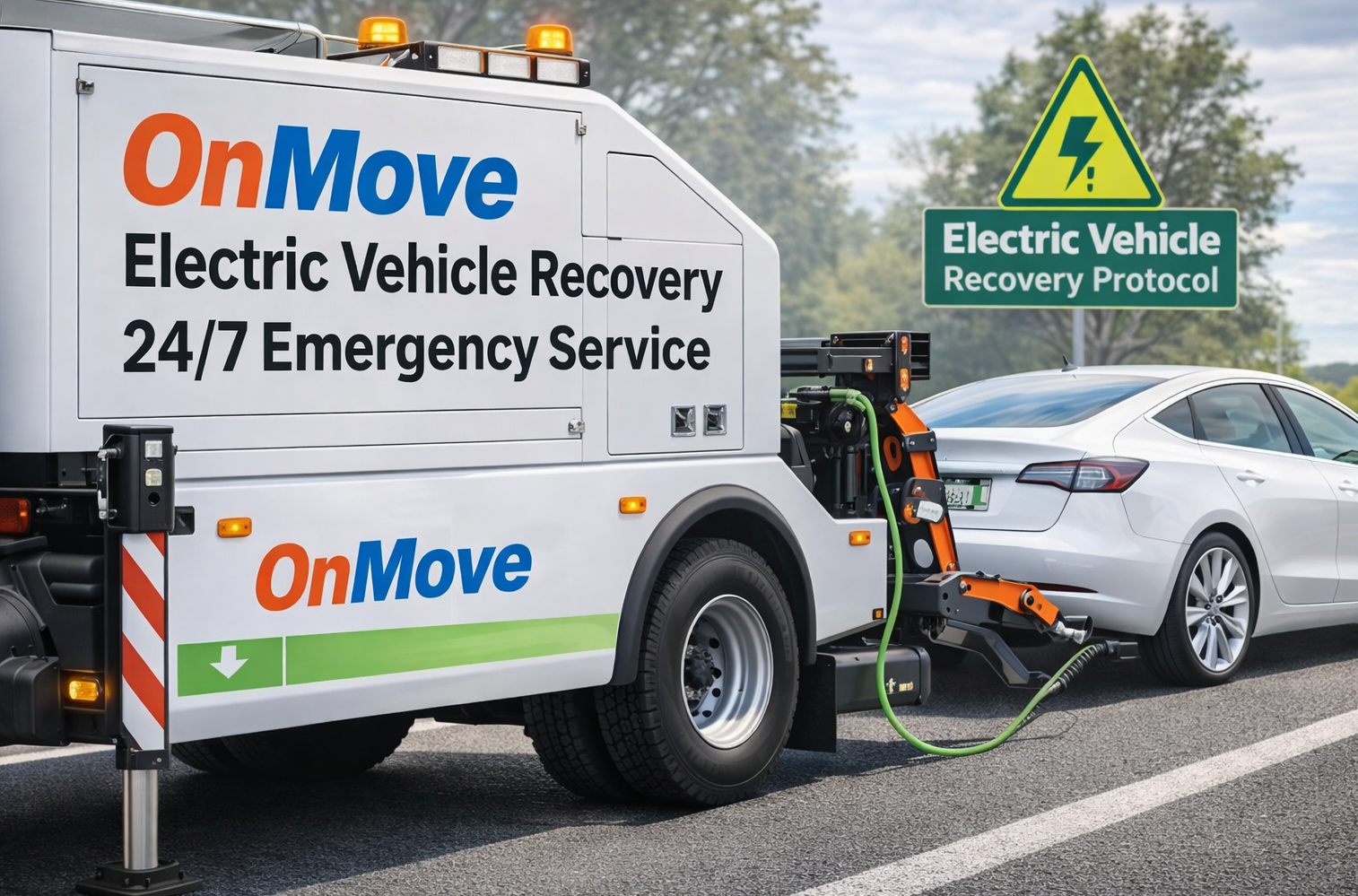
Specialist Electric Vehicle Recovery & Mobile EV Charging
Book Recovery
Our mobile charger can deliver an emergency top‑up at the roadside, but your 12V battery must have enough power to wake the vehicle and allow the high‑voltage charge port to open and accept charge.
We offer Emergency “Boost” Charging — adding 20–30 miles of range in roughly 15–30 minutes, enough to reach the nearest public charging station.
Important: This is a short‑range recovery solution only. It is not intended to provide a full charge, but to safely get you to a suitable fixed charging point.
Our role is to recover your EV safely, protect its high‑voltage system, and either provide a controlled mobile charge or transport it securely to a specialist repair facility.
On electric powered vehicles, unique challenges arise during recovery, such as the Emergency Neutral state. When the wheels are locked, it is often because the electronic parking brake and the electric motor are directly connected to the wheels, preventing standard rolling.
Check manufacturer-specific instructions
for the precise neutral override steps .
Simple causes:
Parking brake engaged (electronic parking brake may stay locked if the battery is dead)
Car stuck in Park (P) due to no power
Brake system fault or seized brakes
Drivetrain issue (motor or gearbox fault)
If wheels still won’t turn. We strictly recommend flatbed transport only (all wheels off the ground by use of wheel dollies/skates under each wheel). . This will ensure the safety of the vehicle's powertrain, regenerative braking system and chassis. We use over-the-wheel straps exclusively.
We do not hook chains to the suspension or battery casing under the chassis,
as this can cause catastrophic damage to the high-voltage system.
At OnMove, we provide dedicated Electric Vehicle (EV) Recovery and Mobile EV Charging services designed specifically for modern electric cars. Whether your battery is low, your vehicle will not “wake up”, or you are unable to reach a public charger, our specialist flatbed recovery and mobile charging solutions are built around EV safety and manufacturer‑aligned protocols.
Many high‑voltage (HV) faults—such as P0AA6 (High Voltage Isolation Fault) or P0A80 (Battery Pack Malfunction)—are designed as “hard locks” for safety. If the vehicle detects a high‑voltage leak, isolation issue, or short, it will permanently lock the internal contactors to reduce the risk of fire or electric shock.
In these situations, no mobile charging or “boost” can override the safety lockout. The vehicle must be transported on a flatbed to an appropriate EV‑qualified workshop or dealer for diagnosis and repair.
We can jump‑start the 12V battery to power up the dashboard and control systems if the 12V is flat. This may allow the car to shift into neutral, open the charge port, or enable safe loading onto our flatbed.
However, you cannot jump‑start the high‑voltage battery with cables. The HV system is fully isolated and protected by the vehicle’s own safety architecture. Any attempt to bypass this is unsafe and strictly avoided under our recovery protocols.
At an EV recovery scene we equip our staff with Chemical hazard gear , fire extinguishers , PPE and first aid kits .